Javascript Redirect

Saturday, September 28, 2013

The IPCC report: When climate change gets personal


On Friday as the United Nations Intergovernmental Panel on Climate Change released its most recent update on climate change, I was meeting with congressional, federal, and other state officials about coordinating for a changing world.

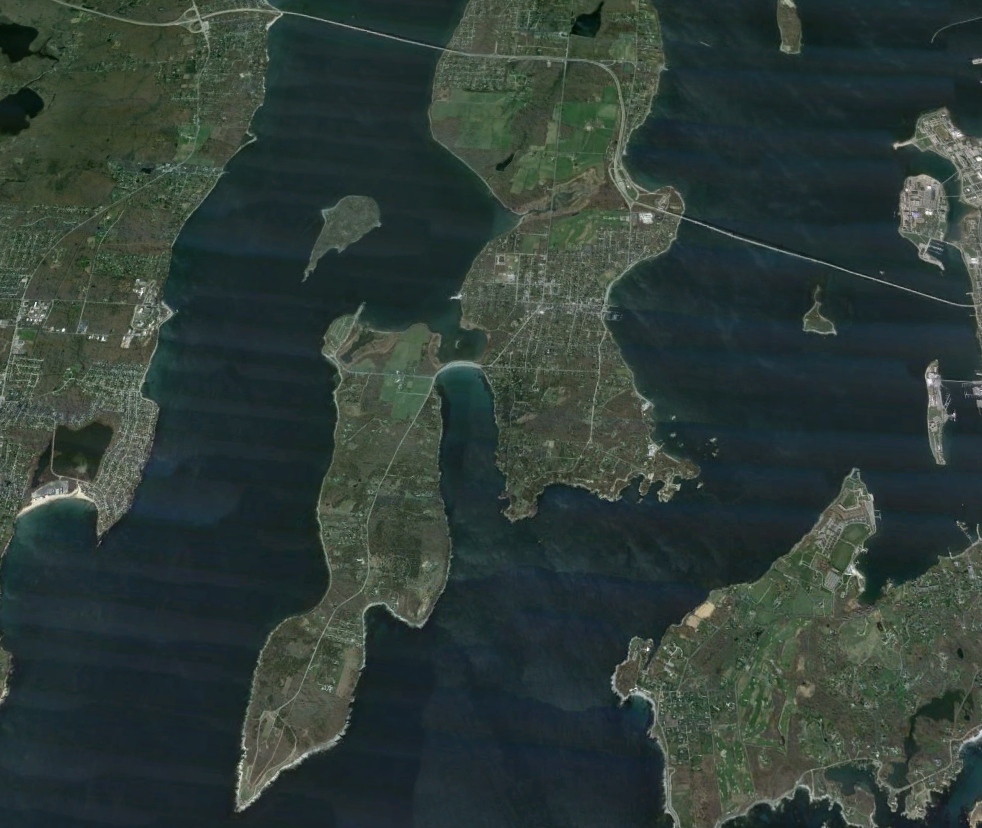
During the meeting, the head of my state’s planning office passed around a few sample inundation maps. One of them was of Jamestown, which is made up of two islands in Narragansett Bay connected by a natural and fragile causeway. 

Over the past few years I’ve seen lots of these maps. I will see many more as my office works with other agencies to determine the vulnerability to wastewater infrastructure from rising seas, increased levels of storm surge, and more intense precipitation. But this particular inundation map broke my heart. It showed the areas of Jamestown subject to rising seas and it included a solid swatch of red on the causeway that connects Jamestown’s two main islands. While the town’s largest area is accessible to the mainland by a large bridge (which isn’t going anywhere anytime soon), the town’s western “tail” is only accessible via that small sandy causeway. 

What hurt was that the map’s red swatch indicated areas threatened with submersion during increasing storm surges and, eventually, permanently because of a rise in sea level. 


Beavertail State Park is on that small island to the west. This funny sounding place is one of the planet’s most beautiful and invigorating. It certainly delights my mom, even if in her old age she can't explore its shore as she well as she did with my dad. But I still drive her there—over the causeway—so that she can stare out into the ocean and let the salty wind rush around her. 

Beavertail's rocky tip cuts into Narragansett Bay like a ship’s bow aimed into the Atlantic. A nineteenth-century lighthouse sits close to the island's edge, often flashing and sounding warnings to passing sailors. These are necessary because the glacial shore rolls steadily into offshore reefs. But those dangers are assets for people onshore. A mix of smooth and layered rock provides hundreds of viewing and fishing platforms and many more crevices and tidal pools for children of all ages to explore. All this is accompanied by the ongoing trio of gull cries,  wave upon wave on rock, and the wind from far-off waters.
The causeway during Tropical Storm Sandy. 
Photo Andy Manca

I can’t imagine how anyone at Beavertail could be an atheist. 

But as the Atlantic Ocean rises and my state’s coastal features move, erode, or disappear, Beavertail’s causeway will likely vanish, as that projection map demonstrated (and as experiences have already shown in major storm events). In time, the projections say, the only visitors to this spot will be boaters who may have to hike long distances to experience what so many generations of Rhode Islanders and so many more visitors have loved so much for so long.


Given all the news on the IPCC report, the probable isolation of Beavertail is hardly the worst issue to speak of. As I plan for the worst at work and home, there are many more pressing scenarios than a causeway that takes automobiles to Beavertail, even if the island is home to a number of private property owners. Elsewhere, entire communities are seriously threatened along Rhode Island’s 400-mile shoreline (which is a sizable number considering the state is only some 1,200 square miles) and along the East Coast.

While someone like me can become numb to these projections—even to the scenes of destruction from events like Hurricane Sandy—there are times when the truth sinks in, when climate change gets personal. For instance, in 2010 my hometown’s river made national news when it flooded the village a few blocks from me. In the midst of the turmoil I couldn’t help but think of the growing amount of meteorological tending data that predicted such events. 

In a similar way, the truth also cuts deep when I look at projections. 


Because I grew up in Rhode Island, I know many of its threatened coastal features and small villages from my childhood, when my mom and dad, brothers, and cousins would spend days at the shore. My dad died seventeen years ago but I can still see him deftly skipping stones as he patiently taught me that rock-throwing skill on the sunny waters off Jamestown. (You really do have to throw a well-shaped, flat stone at just the proper angle. And there really is a right method of holding the stone when throwing it.) I remember managing a double or triple skip, but most times my stones would hit the water hard and sink. Either way, my dad kept showing me what I needed to know, even if I wasn't always the best student.

The particular section of shoreline where this all took place in the early 1970s is just around the bend from Beavertail. In time it will be underwater even during low tides. Later it will be part of the bay’s floor as seas rise and many coastal gems become memories. 

Photo: Flicker/by sapienssolutions
Yes, features will shift and new coastal areas will appear for future generations. This process will be terribly tragic for some who will lose their homes. Others, like me, will see our favorite perches on the bay go under water. In time, future Rhode Islanders will have never known what I and so many know now. I suppose that is the way of things. 

These losses will hurt and hurt all the more when we lose what we love not because nature is taking its course but because we were too slow and too stubborn to see what we were doing—because we couldn't see what was happening and change the way we lived.


Let us hope and pray that events unfold otherwise—that those maps may be wrong
—if it is not already too late to do so.


Saturday, September 14, 2013

The Holy Cross: "That the world might be saved through him"


Then he said to all, “If anyone wishes to come after me, he must deny himself and take up his cross daily and follow me. For whoever wishes to save his life will lose it, but whoever loses his life for my sake will save it." Luke 9:23-24.


A coworker came to my office yesterday excited by the news that the Church was revisiting clerical celibacy. He was, of course, profoundly misinformed by the secular media. NBCNews especially botched their reporting of comments made by the new Vatican Secretary of State, Archbishop Pietro Parolin. Reporter F. Brinley Bruton thought that the archbishop was breaking new ground, which, of course he was not. 

Putting to one side the details of this latest mainstream media misstep, the conversation with my friend and coworker allowed me to point to an image on my wall calendar—an image of the Cross. I did so because as I explained the purposes of clerical celibacy I was speaking about the Gospel of sacrifice that the world would rather do without.

And so there we were, two environmental regulators, pondering the Cross of Jesus Christ. And really, the Cross is a topic that environmentalists must be comfortable embracing.

This particular September 14th, as the Church celebrates the annual Feast of the Exaltation of the Holy Cross, we find the world worried over war in the political sphere and equally worried over humanity's sustained war against nature. As seen from the Data Series interviews so far (here, here, here, and here), man is inflicting unprecedented harm on creation and it will not be easily undone.

What Catholic ecologists seek to bring to discussions of environmental protection is the prophetic statement that the roots of our ecological crises are spiritual crises. In large part, the damage we inflict on creation stems from our individual and collective inability to control our appetites—disordered as they are, seeking fulfillment in worldly things when in fact what we truly seek is a Someone, and that someone is love itself, a divine Trinity of three persons—Father, Son, and Holy Ghost. The desire for God's love isn't difficult to understand. What is difficult is turning toward God and away from our vices.

It is notable that after the words that open this post, Luke places the event of the Transfiguration. In doing so, Luke tells us that the Cross leads to the glory foreshadowed at the Transfiguration. Or as is noted in the famed prayer attributed to St. Francis, “it is dying that we are born to eternal life.”

The necessary changes to our lifestyles that will slow and, one hopes, reverse the rampant and dangerous destruction of our planet’s ecosystems will come only by our seeking the grace of God and by the taking up of our crosses of self-denial. 

This has been foreshadowed in these old Catholic petitions: "Lord, grant me the grace to mortify my senses—to be in this world but not of the world."

And as we read in the Gospel of this feast day, 
Jesus said to Nicodemus: "No one has gone up to heaven except the one who has come down from heaven, the Son of Man. And just as Moses lifted up the serpent in the desert, so must the Son of Man be lifted up, so that everyone who believes in him may have eternal life." For God so loved the world that he gave his only Son, so that everyone who believes in him might not perish but might have eternal life. For God did not send his Son into the world to condemn the world, but that the world might be saved through him. John 3:13-17


Tuesday, September 10, 2013

Data Series #4: Climate change and human inertia

Our occasional interview series continues with a well-known name in climate change science and policy.

Dr. Michael Oppenheimer is the Albert G. Milbank Professor of Geosciences and International Affairs in the Woodrow Wilson Schoo and the Department of Geosciences at Princeton University.

He is the Director of the Program in Science, Technology and Environmental Policy (STEP) at the Woodrow Wilson School and Faculty Associate of the Atmospheric and Ocean Sciences Program, Princeton Environmental Institute, and the Princeton Institute for International and Regional Studies.

Dr. Michael Oppenheimer.
Photo: Princeton University
Dr. Oppenheimer joined the Princeton faculty after more than two decades with The Environmental Defense Fund (EDF), where he served as chief scientist and manager of the Climate and Air Program. He continues to serve as a science to EDF and is routinely sought after by the news media for his climate and policy expertise.

Dr. Oppenheimer is the author of over 100 articles published in professional journals and is co-author (with Robert H. Boyle) of Dead Heat: The Race Against The Greenhouse Effect. His full biography can be found here.


CE: You bring a range of experiences to the climate change conversation—from academia to non-government organizations to the IPCC. With this unique perspective, what do you find is usually missing in the general public’s understanding of anthropogenic climate change and its impacts?

Dr. Oppenheimer: What’s missing is not so much understanding as political leadership. Like most technical issues, the public doesn't have the time to get deeply into the factual arguments. Generally, they look to opinion leaders whom they trust: the President, some Congressional leaders, religious leaders, individuals like Al Gore to give them a sense of where the reality stands. Of course, on some issues, the details are less important than overriding concerns like ethical implications, and people are perfectly prepared to and capable of making their own judgments. On climate change, I believe the public gets the big picture, the long-term stakes, the ethical issue, but has a lot of confusion (exacerbated by intentional obfuscation by some economic interests) on the details. Clear, consistent political leadership, day in and day out, is the one irreplaceable factor for overcoming this sort of confusion.


CE: Likewise, what scientific nuances do government leaders often struggle with?

Dr. Oppenheimer: Governments on the whole understand the details. They have lots of in-house experts telling leaders the truth (when they ask). The struggle is over their willingness to pay short-term costs to preserve the climate and the planet’s sustainability for the long term.


CE: With new studies being added to what we already know about climate change in preparation of the latest IPCC report, what do you think the next six months to a year hold for policy makers and national and local governments?

Dr. Oppenheimer: It’s going to be an interesting ride. I’m an IPCC author so I can’t discuss the details until they are public but I’m confident that the report will provide further details, allowing governments to sharpen their approaches and adding another dose of seriousness to the need for international cooperation to solve the problem. At this point, governments are falling behind what the science says is needed to stabilize the climate during this century.


CE: Many of us encounter critics of climate change science. What would you say are three or four quick statements that would be helpful when dialoguing with these critics?

Dr. Oppenheimer: 
  • Carbon dioxide, the main human-made greenhouse gas survives for centuries to millennia once emitted so today's actions commit the climate to harmful changes for many, many generations.
  • Earth is already warming, and most of the warming is very likely due to carbon dioxide and other greenhouse gases.
  • The projected warming, if emissions continue to grow, would make earth warmer, and warm faster, than any time in the history of civilization.
  • Hurricanes Katrina and Sandy show just how ineffective we are currently at dealing with today’s climate risk. The risk is increasing be the year, and we will inevitably be falling further behind—that means losses of life and losses of property. We need to redouble efforts at adaptation and managing the risk but there’s no way to keep up with the changes without decreasing the emissions causing the problem.

CE: In some circles, there seems to be a growing focus on climate adaptation rather than mitigating the sources of climate change. Given what we know about the rates of greenhouse gas emissions, is mitigation a viable option in the next decade or so? Or is it more realistic to say that adequate emissions reduction will take a century or two to achieve?

Dr. Oppenheimer: We need to mitigate starting now and we need to improve our ability to adapt, starting now as well. Mitigation isn't going to avert all impacts and adaptation can’t possibly sufficiently ameliorate the changes headed our way if we fail to cut emissions.


CE: Is there a question that interviewers never ask you but that you wish they would? 

Dr. Oppenheimer:  After all these years (32) working on climate, I've been asked it all!


Saturday, September 7, 2013

A homily for peace—and creation

“And God saw that it was good” (Gen 1:12, 18, 21, 25). The biblical account of the beginning of the history of the world and of humanity speaks to us of a God who looks at creation, in a sense contemplating it, and declares: “It is good”.  This allows us to enter into God’s heart and, precisely from within him, to receive his message.  We can ask ourselves: what does this message mean? What does it say to me, to you, to all of us?
The homily given by Pope Francis at today’s peace vigil included some profound catechesis. It also occasionally sounded like a homily for Earth Day. This should come as no surprise since many of the roots of man’s violence against nature are the same as those that sound the drums of war.

Benedict XVI said that it is a disorder of our “inner attitudes” that corrupt our good human nature. This disorder makes us selfish, demanding, and gluttonous consumers of worldly pleasures.

Today, Pope Francis put it this way: 
When man thinks only of himself, of his own interests and places himself in the centre, when he permits himself to be captivated by the idols of dominion and power, when he puts himself in God’s place, then all relationships are broken and everything is ruined; then the door opens to violence, indifference, and conflict. This is precisely what the passage in the Book of Genesis seeks to teach us in the story of the Fall: man enters into conflict with himself, he realizes that he is naked and he hides himself because he is afraid (cf. Gen 3: 10), he is afraid of God’s glance; he accuses the woman, she who is flesh of his flesh (cf. v. 12); he breaks harmony with creation, he begins to raise his hand against his brother to kill him.  
And so in the midst of worldwide conflicts, Christianity offers a view of creation—and thus of mankind—that denounces the belief that man’s foundation is corrupt. It proclaims that our foundation is God—the Creator of heaven and earth, of all that is visible and invisible. And God, who is love and relationship, is indeed the perfection of good.

Here I would like to restate a reply in my recent interview with Dr. Robert Brinkmann of Hofstra University. My answer helps place into context how the Christian understanding of creation—and thus reality—shapes our hopes and expectations—and can then inform our actions. Dr. Brinkmann had asked me about the roots of the Christian understanding of ecology. I answered that 
[i]t goes back to the beginning—to those early mystics within the nascent people of Israel who recorded (orally at first and then in writing) that in the beginning God created everything good and orderly. Hebrew Scriptures are a love story about God’s relationship with humanity and the entire cosmos. It’s a revelation about the innate goodness of all creation. What we often don’t appreciate is how this message was a radical addition to human thought made by the early Jewish people. All around them—in ancient Babylon and Assyria—much more powerful nations taught that evil existed before the creation of the world. The Jewish people, inspired by God within human history, said no to this. Interestingly, this teaching on the goodness of creation that we find in Genesis (which we all know is not a science book) survived and remains with us today while the Babylonian creation stories (which presupposed evil) were lost for centuries in the sands of the Middle East.
 This insistence that creation is good because God created it is a central reality within Christianity. Christians proclaim that the Word of God entered the human condition in Jesus Christ. That alone elevates the natural world. And then, as taught by Christ, the natural world becomes a vehicle of coming into contact with God’s grace—for instance, through baptism with the use of water; Communion through the sacrificial offering of bread and wine; reconciliation, with the familiar use of human dialogue; healing, with primitive oils. And then there is Mary. She also connects creation with the divine in an amazing demonstration of love and relation.
 At today’s peace vigil, Pope Francis put it this way: 
All of creation forms a harmonious and good unity, but above all humanity, made in the image and likeness of God, is one family, in which relationships are marked by a true fraternity not only in words: the other person is a brother or sister to love, and our relationship with God, who is love, fidelity and goodness, mirrors every human relationship and brings harmony to the whole of creation.  God’s world is a world where everyone feels responsible for the other, for the good of the other.  
But then he added:
This evening, in reflection, fasting and prayer, each of us deep down should ask ourselves: Is this really the world that I desire?  Is this really the world that we all carry in our hearts?  Is the world that we want really a world of harmony and peace, in ourselves, in our relations with others, in families, in cities, in and between nations?  And does not true freedom mean choosing ways in this world that lead to the good of all and are guided by love?
Good questions. And they are appropriate not just in times of war. We must ask the questions during every moment of our lives. For how we answer them—how we choose to live our lives—determines not just the fate of nations or the prospects of conflict. Our answers also dictate whether we will tend to or devastate the garden that is Earth.


Wednesday, September 4, 2013

Five eco-reasons why we don't want war

While the American political machine considers whether or not to stoke the fires of Syria, more reasoned voices are calling for peace. Pope Francis is one such voice and he has added prayer and fasting to this call. 

While we wait, pray, and fast for miracles (small and big ones)—and as we call in all sincerity for truce and dialogue—the horrors continue. And so we think of the immediate harm done to people remaining in Syria and to the over two million who have fled. We think of the violence done to individuals, most often the weak and innocent; to families; and to entire communities. Compounding the suffering of war is the damage to natural environments. This is not a small issue because such damage impacts people during and long after the fighting ends.

Here are five reasons why eco-issues count when we go to war:

War pollutes water supplies: Drinking water comes from reservoirs, rivers, or groundwater. The bombardment of weaponry contaminates these supplies with a missile's residue and with the debris of what was once a built environment. Fuel contamination, metals, spilled chemicals and chemical weaponry can easily turn a region’s water supplies into a toxic slurry. For the most vulnerable people—children and the elderly—such contamination results in imminent harm if this water is ingested or slow dehydration when family members are forced to travel long distances to find clear, potable water. Basic sanitation also quickly becomes an issue when clean water is not readily available.

War pollutes the air: Soldiers, well-connected rebels, and well-prepared civilians may have gas masks during times of war. For those without such devices, toxins and particulates can be a regular component of what one takes into one’s lungs. Smoldering fires and regular bombings can keep the air sullied for hours and days—or weeks or months.

War obliterates natural habitats: All that teeming life that God found good in the Book of Genesis needs a home. In fact, most life forms prefer particular kinds of homes. The destruction brought by war—along with all that polluted water and air—devastates a region’s unique natural habitats, and unique habitats help define a quality of life. Besides the damage to non-human species, habitat destruction can easily impact local fishing and agriculture, which only adds to the suffering of the innocent.


Photo: Flicker/ninjawil
War destroys infrastructure:
Roads, bridges, and airports become the frequent targets of bombing. Other targets—whether intended or not—include underground water and sewer lines, drinking water and wastewater treatment facilities, and other infrastructure necessary for public health and a clean environment. Such infrastructure is expensive to replace and not quick to rebuild. This damage becomes a long-lasting communal wound long after conflicts cease. And thus the suffering continues as people lose access to clean water and as their natural waterways are contaminated with sewage.

War leaves behind a toxic dump: Added together, the consequences noted above are compounded by the debris of factories, homes, vehicles, above- and below-ground chemical storage systems, electrical transformers, and a host of other man-made systems and devices that use toxic chemicals, heavy metals, fossil fuels, and lost more. Then there is the matter of regular garbage pickup, which can easily come to a halt during times of war. With massive amounts of debris strewn about during and after a war, cleanup takes time—lots and lots of time. And even after debris is hauled away—hopefully to a safe landfill—widespread soil contamination often makes once pristine neighborhoods uninhabitable.

This is of course a short list. It is neither detailed nor specific to a particular conflict. But this subject does not require advanced degrees to understand. 

Under specific circumstances, some wars can be justly waged. But William Tecumseh Sherman said it best in the late nineteenth century: "war is all hell." One reason why this is so is because war leaves behind a hellish environment when it’s over, scarring for a long, long time God’s very good, life-sustaining creation.


Saturday, August 24, 2013

An open letter to Mark Ruffalo

Mark Ruffalo, with Sunrise Coigney 
at the opening of Marvel's The Avengers
Dear Mr. Ruffalo:

I applaud your advocacy against the growing practice of “fracking.” This invasive technique penetrates deep into shale deposits and injects into the earth millions of gallons of chemically laden water. This shatters rock and releases natural gas. But for all its benefits, fracking has many drawbacks. And yet it has been used with increasing frequency across many portions of the United States and across the globe.

As you note in this Metro opinion piece,   
[t]he cause of groundwater contamination, air pollution and even earthquakes, fracking is also disastrous for the climate because it releases methane, a potent greenhouse gas, into the atmosphere. 
For such reasons, I and many others have also raised concerns about fracking. But because of your fame, many hear your voice and not ours. And so your strong words against fracking have offered you and this issue a great deal of attention, from Rolling Stone Magazine, the New York Times, and many other forums.

Of late, you have also received attention for your recent words supporting abortion—and here is where you and I part ways. You see, Mr. Ruffalo, I cannot be concerned about human life in one issue but not another. 

Fracking penetrates the earth and shatters shale with harsh chemicals and in so doing unleashes pollution that harms people—born and unborn. The invasive practice of abortion does similar harm—and much worse. Abortion causes damage in ways that you seem to be ignoring, just as fracking proponents ignore the harms of that practice.

In your statement, you tell a personal story about your mom and her abortion. Let me then speak to you about my mom—and about my grandmother.

In 1927, soon after her first child, my grandmother was living with her in-laws when she became pregnant for a second time. One day, her mother-in-law brought home a small package. She instructed my grandmother to boil its contents and drink the water once it had cooled. This would kill the baby inside her.

My grandmother was scared. She was living in the home of her husband’s parents and was being coerced to abort her child. “My son works too hard already,” said my grandmother's mother-in-law. The legality of abortion was not an issue. Its effects were. And there seemed to be no choice.

Fortunately, my grandmother did not live in a culture that supported the wishes of her mother-in-law over what she knew to be right and just. After great prayer and soul searching, she confronted her husband and her mother-in-law. She demanded that the life within her be allowed to live. Months later, she did have her baby, a girl that would grow up and give birth to me.

As I take care of my mom today as she advances in years, I am saddened at the thought that her grandmother would wish her dead. Similarly, I am saddened that you would be so seemingly carefree about the loss of a sibling. My mom had four miscarriages. Those are four siblings that I will not know in this life but nevertheless count them as brothers and sisters with souls.

Mr. Ruffalo, in the motion picture Marvel's The Avengers you play the character of Dr. Bruce Banner. This damaged soul occasionally morphs into the monster called the Hulk. I would ask you to reflect on this fictional tendency to live as a good man who worries always about releasing a harmful force into the world.

Abortion always kills a baby and harms a woman—always. The worst of abortion's consequences are permanent. That you would encourage this is horrible—more so than any computer generated monster that Hollywood’s wizards can conjure.

In your letter, you write 
I actually trust the women I know. I trust them with their choices, I trust them with their bodies and I trust them with their children. I trust that they are decent enough and wise enough and worthy enough to carry the right of Abortion and not be forced to criminally exercise that Right at the risk of death or jail time. 
Might I ask you to ponder the medical information about the development of human life and be good enough to encourage abortion providers to share this information with the woman who come to them (or are brought to them)? And then, with the fullness of trust in women—which you and I share—allow this information to be part of their choices.

Later you write, 
I invite you to search your soul and ask yourself if you actually stand for what you say you stand for. Thank you for being here today and thank you for standing up for the women in my life. 
Likewise, I invite you to search your soul. I ask you to find within you the concern for human life that you so boldly champion in your fight against fracking. Then consider if you are ignoring this concern with your encouragement of the killing of innocents and the scaring of pregnant woman.

You see Mr. Ruffalo, I, too, am concerned about the woman in your life and the women everywhere—here, now, born, unborn, and for all the generations yet to come, assuming, of course, that thy are allowed the right to life.

May God bless you always.

Bill Patenaude


Wednesday, August 21, 2013

Data Series #3: Biodiversity lost

The third in our occasional series on the ecological sciences looks at biodiversity and the extinction of species. What is biodiversity and why is it important? What do the numbers tell us about how much of it we're losing and why?

Answering these and other question is Dr. Peter Raven, an active member of the Pontifical Academy of Sciences and one of the world's leading botanists and advocates of conservation and biodiversity. For four decades until 2010, Dr. Raven headed the Missouri Botanical Garden, an institution he nurtured into a world-class center for botanical research and education and horticultural display. Described by Time magazine as a "Hero for the Planet," Dr. Raven champions research around the world to preserve endangered plants and is a leading advocate for conservation and a sustainable environment.
Dr. Peter Raven
Photo courtesy of the Missouri Botanical Garden

In recognition of his work in science and conservation, Dr. Raven is the recipient of numerous prizes. He also served for twelve years as home secretary of the National Academy of Sciences and is a member of the academies of science in Argentina, Brazil, China, Denmark, India, Italy, Mexico, Russia, Sweden, the U.K., and several other countries. The author of numerous books and reports, both popular and scientific, Dr. Raven co-wrote "Biology of Plants," an internationally best-selling textbook, now in its sixth edition. He also co-authored "Environment," a leading textbook on the environment.


CE: What exactly is biodiversity and why is it important?

Dr. Raven: Biodiversity is the total diversity of all plants, animals, fungi, of all life forms making up the living systems on Earth. And it’s all the variations within these systems, genetic and otherwise, such as how various environments make similar organisms look different and grow differently.

This diversity is important for several reasons. Fundamentally, we depend entirely on the planet’s living systems for survival. We’re a part of these systems and we cannot exist without them. The better we understand how the systems of life work, the more sustainably we can live. The less we know, the more likely we’re going to continue causing irreparable damage to Earth’s ecosystems.

We should think of all life forms as the endowment of our earth—it’s what we've been given. We have a moral obligation to understand life and manage the systems of life sustainably. In Genesis 2, verse 15, it is written “God took the man and put him in the Garden of Eden to work it and take care of it.” How well are we doing with that mandate to care for the earth, written at a time when the total number of humans on this planet was less than ten percent of what it is now?

Practically speaking, all food comes from plants, directly or indirectly. Ninety percent of our food relies on just over one hundred types of plants. The concern is what happens when we see continued losses of plant species. It’s estimated that one-third of all of the estimated 425,000 kinds of plants could disappear in six or seven decades, which would be about the same percentage of extinction as we estimate for other organisms.

Also, two-thirds of the people in the world depend directly on plants as medicine, many of them in China and India. And about a quarter of our prescription drugs were discovered from plants or are still extracted from them. Of course, we've only looked at a small proportion of the plants.

Tambopata River in the Peruvian Amazon
Photo: Flicker/kingjn
And so the ability to maintain these species is for our benefit—but protecting the various forms of life in the biosphere is something we ought to do just for their beauty and for the joy they bring to our lives. What right do we have to destroy them?


CE: What should people know about the findings of research into biodiversity loss and species extinction?

Dr. Raven: Species are disappearing more rapidly than they have in past 65 million years—and the rate is accelerating. And we’re causing this increase in a number of ways: the destruction of natural habitats; bringing invasive species into ecosystems;  climate change, all caused by a combination of our own population growth and even more rapidly rising consumption levels; and destructive technologies, which drive the overall rate of extinction. In consideration of these factors, a very high rate of extinction is unavoidable. There are three people on earth for every one person who was alive when I was born in the mid-1930s!


CE: How do researchers determine rates of extinction—how do we know species are disappearing so quickly?

First we study the fossil record to determine rates of extinction over very long periods of time, using kinds of organisms that are well represented in the fossil record. We also have some five hundred years of printed books. There is lots we can learn from what’s been written down over those centuries. And then we look around and see which species aren't there anymore. In comparing all this data, we can measure trends and easily conclude the rate of extinction is several orders of magnitude higher than what it has been historically.


CE: It sometimes seems that when asked about ecological problems, people often think first of climate change, running out of fresh water, and water or air pollution as issues of primary concern. Do you believe that issues of biodiversity are given the attention that they are due? Or are they so linked with other issues that any discussion of environmental damage ultimately speaks to losses in biodiversity?

Dr. Raven: Biodiversity and species loss can be difficult to grasp. The concept of so many species, most of which you never see, disappearing, is a kind of abstraction. It’s difficult for people to get excited about something that just doesn't seem to come into focus in their daily lives.


CE: Where has research focused in the past decade and why?

Dr. Raven: There’s a few important areas. One area being researched is in trying to inventory species, to the extent that it can be done. Not counting bacteria, which no one can estimate, there are probably more than twelve million species on Earth—plants, animals, fungi, and microorganisms taken together—and not quite two million have even been recognized and named. And so researchers are trying to build up this list, focusing on groups that are obvious—butterflies, mammals, birds, and mosquitoes, which are important to know about since they are so effective at spreading diseases. By studying these relatively well-known groups we can gain a picture of the pattern of distribution of life on earth. And we’re also trying to get sampling of less obvious groups of life, too, to round out the picture. We can do this partly by comparing their patterns of abundance and distribution with those about which we know much more.

Photo:Flicker/USFWSmidwest
We’re also studying the functioning of ecosystems, in aggregate. Specifically how energy from sun is transferred through algae, plants, and other organisms, and how these systems interact with the water cycle, the cycling of minerals from the non-living world to the living one, and all the ways in which such interactions lead to the smooth function of ecosystems.

There is also a lot of research in the metabolism and genetic characteristics of organisms, to see how they function and how they may be modified for agriculture. Such modifications to the molecular makeup of the organisms can take place in any number of ways, one of which is genetic modification. There is a lot of discussion about this but most scientists are comfortable that genetic modification is not dangerous. In general, climate change and the increased need for food—an estimated one billion people are malnourished now, and our overall population is projected to grow from the current 7.2 billion to 11 billion at the end of the century—will require us to intensify our research into agriculture and improve our agricultural practices greatly.


CE: What can future research help us better understand?

Dr. Raven: In a practical sense we’d like to see as many kinds of organisms as possible be preserved for the future, and to keep as much of their genetic variation as we can as well. That would involve a lot more effort than currently underway. The pressure on the biosphere is enormous already, and then you add our population increase and climate change, it will be increasingly difficult for us to maintain our stock of biodiversity in as complete a state as possibly. In the light of these trends, it is of enormous importance for the preservation of human civilization in the future to save as many organisms as we can, especially those of obvious and particular importance for the functioning of their ecosystems, or for us for special reasons—such as their role in food or medicine, for example.


CE: What steps can governments, civil associations, and individuals take to respond to issues of biodiversity loss?

Dr. Raven: People can learn more about how their actions impact global sustainability. A particularly useful reference for learning is the website of the Global Footprint Network.

We must all think much more internationally than we do now. People can learn continuously, to keep their knowledge up to date, about what is happening to the biosphere and then act on what they come to understand. They can teach their children about biodiversity. Most children are very interested in plants and animals when they are young but they often move on to other considerations as they get older.

Governments can take a wide variety of actions. They can preserve land; develop policies to stop burning inefficient fuels; they can encourage switching to more sustainable methods of food production; they can learn more about organisms in their own borders, and encourage other nations to do the same. They can sponsor many forms of consumption that are less destructive than the ones that are widespread now

The world’s poor will clearly suffer the most because of losses in biodiversity. Their habitats are typically the ones decimated, their agricultural systems deteriorating, the wild plants and animals on which they depend decreases in abundance and all of the conditions of their lives changing for reasons over which they have no control. The situation is plainly morally unacceptable. It’s more than just the effect on indigenous peoples; it’s a matter of the plight of poor people in general that we need to consider.

Especially disadvantaged are often women and children, who in many societies are not brought in to the power structures and given the opportunity to contribute what they could to our overall benefit. When you have more than one hundred million people worldwide at the edge of starvation at any given time, small changes to ecosystems have big impacts. Our consumption levels in the industrialized world, our expectation of an ever-growing prosperity, are increasing based on importing goods from countries less fortunate than ours, and will be even more so in the future if we continue on the present track.This is simply, in a Biblical sense, not taking care to the slightest degree of those less fortunate than ourselves.


CE: What has been your greatest frustration in both researching and teaching this (or related) topics?

Dr. Raven: People are preoccupied by daily life. They don’t take time to reflect on how as a group they impact the larger world. Politicians don’t like to be unpopular, and telling people the truth about their collective effects on the functioning of the earth and what would need to be done, partly by much stronger cooperation between nations than we enjoy now, will always be unpopular. People naturally want more and more for themselves and their families, but when there are so very many of us with such high and ever-increasing demands, it just doesn't work.

One tragic aspect of our lives is that people operate as if their possibilities for consumption are unlimited. This has to change. We need alternate kinds of economies that do not depend on endless growth in a world that cannot support such growth. We need to develop a lot more concern and love for all the people of the earth. Without such changes, there is no hope of solving the enormous problems that we are facing together.

Of course, we will eventually live sustainably, because there is no other option: we can’t go on indefinitely, the way we are. The question is, how much will be left after we consume so much? How much of the world, the joy of the world, has already been decimated and lost permanently? And how much more beautiful, more prosperous, more joyful can it be if we get busy and understand what we’re doing and preserve what we have now to a much greater degree than we might otherwise?


CE: What has been your greatest joy in your work?

Dr. Raven: People are starting to appreciate the problem more and more.

In the 1950s, very few people were concerned about the need for conserving natural resources or biodiversity. And if you think about it, it’s only been a short time since we had wide open frontiers, when everything seemed endless. Now we’re realizing the importance of individual responsibility. People have been taking action as we know more about species losses and see the results of our lifestyles. At the end, it’s a Biblical lesson—concern for those less fortunate than ourselves, moderation in our own lives, conserving rather than destroying. It’s just that the need for applying such principles has become so much greater.


CE: Lastly, is there anything you’d like to add that we haven’t covered?

Dr. Raven: Scientists and scientific findings should be taken seriously. When it comes to issues like climate change or genetically modified foods, scientists should be allowed to let the data say what it says. They operate according to well established standards that continually examine and verify or disprove their conclusions. When data enters into politics, truth becomes opinion and opinions are often based on wishful thinking or the desire to avoid disagreeable actions or taking difficult steps. If such opinions are given a footing equal to that of tested scientific hypotheses, we putting ourselves in real danger at a time in world history when we simply cannot afford to do so.

People often don’t naturally want to do what they have to when they accept what science is telling us about our lifestyles. People don’t always want to think about the future. But you have to when the science is showing us what will happen if we stay on our present course.

Science doesn't tell you not to jump off thirty-story building. It just says what will happen if you do.

Sunday, August 18, 2013

Data Series #2: Global sustainability and "the impact of our choices"

We continue our series of interviews with scientists studying humanity's impact on the planet.

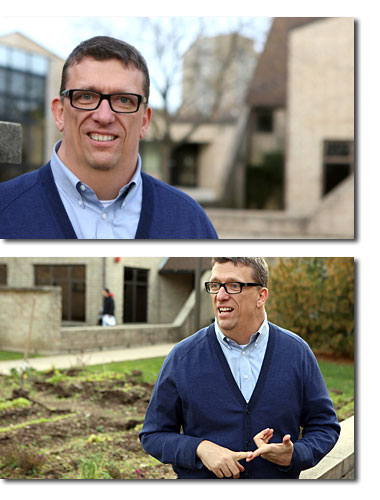
Helping us understand the topic of sustainability is Robert (Bob) Brinkmann, Director of Sustainability Studies at Hofstra University and the Director of Sustainability Research at the National Center for Suburban Studies. He is also a consultant with the United Nations on sustainability issues. 

In addition, Dr. Brinkmann is a professor in Hofstra University's Department of Geology, Environment and Sustainability. He chairs the Board of the National Cave and Karst Research Institute and is an Associate Editor for the Journal of Cave and Karst Studies. His new book, Florida Sinkholes: Science and Policy, will be published this year and is available from the University of Press of Florida here. Born in 1961, Dr. Brinkmann is a native of Wisconsin.

Dr. Robert Brinkmann

Catholic Ecology: The word "sustainability" is used more and more frequently among environmentalists and policy makers. What is sustainability?

Dr. Brinkmann: Sustainability is basically using resources today so that they are around for future generations. It is an outgrowth of the conservation movement of the 20th century. However, it encompasses elements of environment, economic development, and social justice. In the past, most conservation professionals were focused on protecting the environment. Now, we are concerned with not only the environment, but also with ensuring that our actions are fair and provide reasonable economic opportunities.

Sustainability grew in reaction to the globalization trends of the 80's and 90's. We saw widespread expansion of economic opportunities during this time. However, we also saw widespread environmental degradation and pollution as well as an expansion of economic disparities.

It is important to note that sustainability science relies on quantitative analysis of success. For many years environmentalists were criticized as "tree huggers" because we were emotionally connected to the environment and didn't have strong science to back up our activism. There is absolutely nothing wrong with being a tree hugger. I'm one. However, our modern sustainability science allows us to measure the impacts of our actions on the planet and model our actions to understand how they will impact us for generations.


CE: It sounds like sustainability is often considered to be a large-scale reality—the choices made by governments and companies and communities. How would the average person—a home or small business owner—think about sustainability in their own lives?

Dr. Brinkmann: There is that old phrase, "think globally, act locally." That is so true today in our smaller and smaller world. We can each make individual choices that allow us to live more simply and in tune with nature. We do not have to buy into the consumerist tendencies in our culture that encourage us to buy more and more. I think it is also important to be a good example for others. We should teach our skills, get involved in our community, write, and help others.

Some simple day-to-day things we can do might include: drive less, plant a garden, reduce the waste you produce, and volunteer to help others. Try to measure the impact you are having in these choices. How much less gas did you consumer over the year? How much food did you produce? How many hours did you volunteer?

As far as small businesses, there are so many options! I think one of the most important things that a business can do is to look at the nature of their business to try to find ways to limit their impact on the environment through all actions. There are many consultants that will help green small businesses. Plus, there are also lots of professional networking organizations that will help. Some communities have green small business certifications as well.


CE: What does the data show about how various nations are factoring sustainability into their policies, laws, and educational systems? And what obstacles are they finding?

Dr. Brinkmann: I've been looking at the range of sustainability practices taking place around the world for a project I am doing with the United Nations and it is really impressive to see how much work there is around the world on sustainability. Overall, most nations are looking at things like life expectancy, improvement of education, and reduction of poverty. They are also making significant strides on things like ensuring biodiversity and building sustainable development policies within national priorities. Indeed, most nations have developed reports outlining their progress.

The biggest obstacle, especially for the poorer nations, is funding. For example, how does one move toward green energy in some nations when they do not have funds to invest in an updated grid system or the solar or wind farms that will supply the energy. We certainly face these issues in the United States, so you can imagine how difficult it is in the developing world.


CE: Are there any common themes among the nations?

Dr. Brinkmann: Besides the ones mentioned above, most nations are heavily focused on building green energy and a sustainable and healthy water supply. Most of the nations are also looking toward the focus on sustainability as a form of economic development. We've done this here in the United States to a certain extent by investing in solar and wind farms. Many are also concerned with ensuring that all of their citizens are engaged with sustainable development to ensure that it is fair and equitable.


CE: What are some of the striking differences?

Dr. Brinkmann: I think that the most striking difference is actually in the U.S. We are one of the few nations of the world that doesn't have a strong sustainability program. We have it somewhat fragmented in the different cabinet offices of the United States, but we really don't have strong national goals like other nations. I'm not saying we don't have individual goals in things like green energy, but we don't approach sustainability comprehensively. As a result, the best approaches to sustainability planning and management are at the local or national level. That is why we see that individual cities or states are very focused on things like setting goals for greenhouse gas reduction or improving access to healthy food.


CE: Does the data show if cultural world views impact a nation's engagement on sustainability?

Dr. Brinkmann: Absolutely. There are a few nations of the world that are not fully engaged with the modern sustainability movement because they see it as a new form of capitalist oppression. However, by far, most nations are involved with sustainability in some way and many have developed their own unique approaches. There are two great examples. Bhutan, for instance, has developed a sustainability index called the Gross National Happiness Index. The indicators that focus more on social justice and quality of life. The Canadian approach to measuring sustainability includes a range of standard indicators associated with environment, equity, and environmental protection. But it also includes things like access to live entertainment and national parks as well as reduction of diseases associated with the West, like diabetes. Many nations have developed individualized sustainability indicators and plans that fit their needs and that reflect their culture.


CE: China and India are getting a lot of attention as fast-growing nations seeking to employ millions by adopting Western industrial economies. This is causing significant environmental issues. What has your work shown about sustainability thought in those nations?

Dr. Brinkmann: Both of these nations are rapidly developing and are confronting the issues of development faced in the 1950's and 1960's in the United States. I do research in China and I have found that China is getting very serious about sustainable development. One of the challenges that China faces, however, is that they do not have a strong history of non-profit activity or social activism. We know that in the U.S., these are major drivers of environmental policy. In China, most of the environmental policy is coming directly from the government that also encourages economic development. It will be interesting to see how the environmental institutions evolve in this unique setting.


CE: What was the biggest surprise found in your research?

Dr. Brinkmann: I was surprised by how many sustainability projects are taking place all over the world. We often think that we are leading the way on a number of things in the United States. In this case, we are following the rest of the world. We do some amazing things, but we do not have a comprehensive sustainability vision at the national level. We are much more fragmented in our approach.


CE: If you had to give an award to the nation with the best sustainable practices, which would it be?

Dr. Brinkmann: I would actually give it to New York City. While not a nation, I think that your readers would get a better understanding about the way that sustainability is actualized by taking a look at New York's sustainability plan here. It is highly quantitative and addresses the major themes of sustainability. Think what we could do if we had a national conversation about this!


CE: What else would you like to add?

Dr. Brinkmann: I think that some in the United States do not like the concept of sustainability because they look at it as a big government thing. I suppose in some way it is. We have big problems like climate change that are huge that must be managed by large organizations. Governments are the only way we know how to do this quickly. Governments are also key to funding the type of research that needs to go forward to understand how to deal with complex global problems. Plus many of the issues with sustainability are already managed by the government: agricultural policy, transportation policy, energy policy. 

I think a better way of thinking about sustainability for those who are nervous about more government is to think about how we can change our government to do better. Do governments really need to build more roads or do we need to build more sustainable transportation options? Do we need to subsidize big agricultural companies or do we need to subsidize the small farmer? Do we need to subsidize dirty energy or subsidize green energy? It is not about building more government. Instead it is getting our governments to refocus resources on the issues that will allow us to have a more sustainable future.

I also want to stress that it's not all about government. It is about changing our lifestyle from the hyper consumer world we live in into a more intentional thoughtful life that examines our role in the world and the impacts of our choices.